Newsletter Subscribe
Enter your email address below and subscribe to our newsletter

Enter your email address below and subscribe to our newsletter
Learn, Tech & AI

 ByUpkar
Do you know India has the world’s largest cattle population, and in 2026 that translates into a serious business edge for anyone looking at the cow dung products export business.
Are you looking for a low-cost business idea in India with real global demand?
If you’re actively searching for how to export cow dung products from India, chances are you’re looking for something different—something low investment, less crowded, and actually scalable. And surprisingly, this niche ticks all three boxes.
This isn’t theory or recycled advice. It’s a practical breakdown meant for someone who wants to explore a gobar export business in India seriously—even with a small starting budget.
According to NITI Aayog, Indian cattle produce around 3 million metric tonnes of cow dung per day — and Rajasthan alone recorded a Gross Value Output of INR 10,190 crore from cow dung in 2023–24. That’s a staggering supply-side advantage that no other country can match.
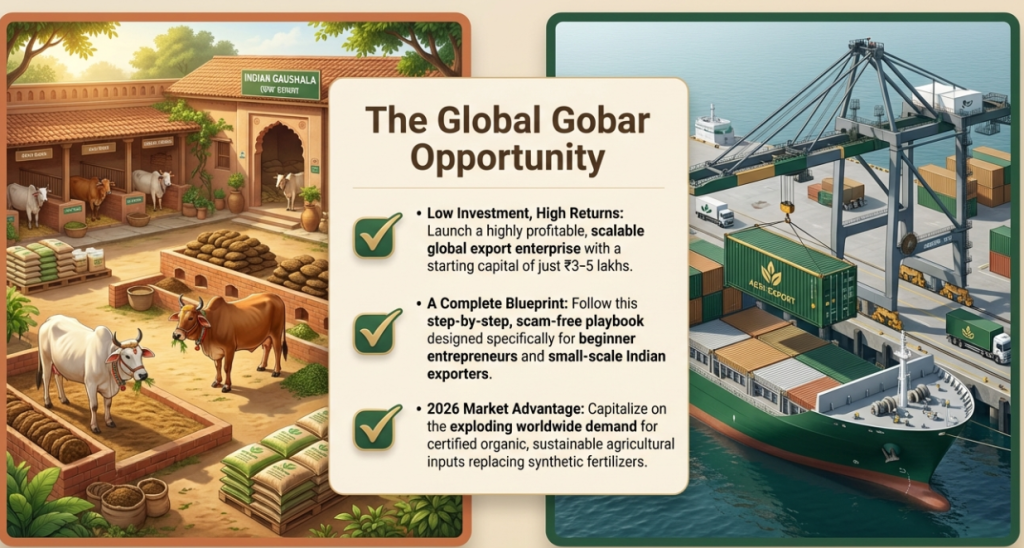
On the demand side, Gulf countries are using cow dung as a soil enrichment solution for palm tree plantations. By 2026, the demand for organic fertilizer export from India has spiked because Indian cow dung is rich in microbial content compared to synthetic alternatives.
The US and EU markets want certified organic inputs. Nepal and Southeast Asia are expanding their organic farming footprint. The timing for Indian exporters is genuinely good.
In 2024–25, India’s cow dung exports included fresh cow dung worth INR 125 crore, fertilizers worth INR 173.67 crore, and compost manure worth INR 88.02 crore — with 181 exporters supplying over 327 buyers globally.
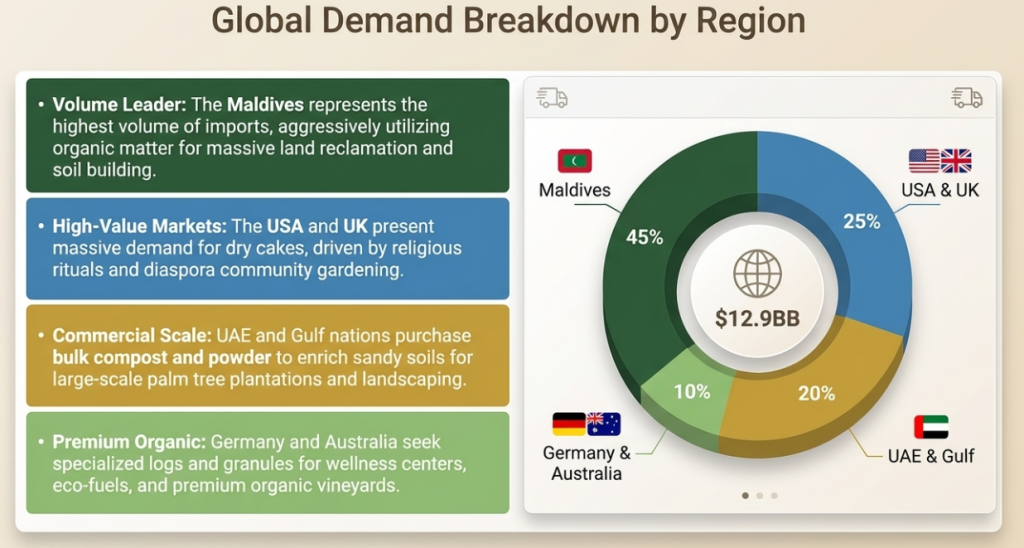
The export market has reached a value of Rs. 400 crore, with growing interest from buyers in the USA, Italy, France, the Maldives, and Gulf nations.
Real talk: Don’t expect overnight riches. But if you’re patient, this is one of the few export businesses where ₹5–10 lakhs can get you started — and margins can hit 40–60% on repeat orders.
Register your firm (sole proprietorship, partnership, or Pvt Ltd). Get Udyam (MSME) registration for subsidies and export benefits. Open a current bank account suitable for foreign transactions. This stage usually takes 10–15 days if documents are ready.
To start a cow dung products export business in India, you need a to register your business and complete legal frameworks.
To ship any commercial goods internationally, you need the correct Harmonized System (HS) code. This dictates your customs duties and tracking. The top HS codes for this sector are:
| Product Category | HS Code |
| Animal/Vegetable Manure (Dried Cow Dung) | 3101 00 91 |
| Vermicompost / Mixed Organic Manure | 3101 00 99 |
| Cow Dung-Based Incense / Agarbatti | 3307 41 00 |
HS Code = your product’s passport number. Wrong code = delays, fines, rejections.
The paperwork is where most beginners get stuck. Beyond the basics, you will need:
Finding buyers is often the biggest hurdle for beginners. To secure contracts, list your business on trusted B2B platforms. Cold emailing doesn’t work. Here’s what does:
Red flag: Any buyer asking you to pay “customs clearance fees” upfront? Ghost them. Classic scam.
Buyers care about three things:
When searching for a freight forwarder, ensure they have experience with agri product export India guide protocols. Shipping cow dung is not “dangerous goods,” but it does require clean containers to avoid cross-contamination.
Cow dung products are sensitive to moisture. If you are shipping cow dung cakes, moisture-proof vacuum packaging is a lifesaver. For bulk organic manure, HDPE bags are the industry standard.
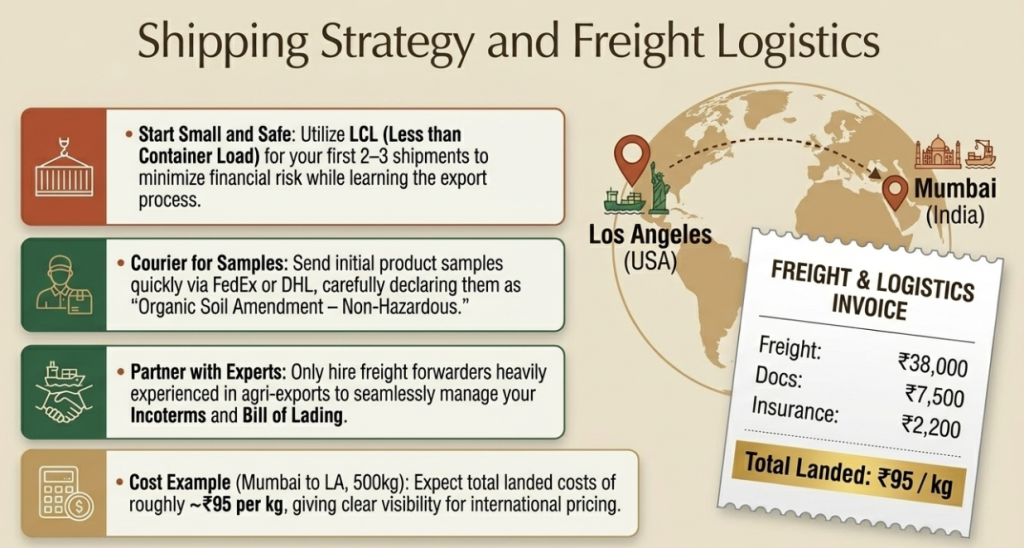
Cost snapshot (Mumbai to Los Angeles, 500kg):
- Freight: ₹38,000
- Documentation: ₹7,500
- Insurance: ₹2,200
- Total landed cost per kg: ~₹95
Sell at $3–5/kg overseas. Do the math.
| Country | Product Type | Key Use Case |
|---|---|---|
| USA | Cakes, Powder | Gardening, Religious Rituals |
| Germany | Logs, Compressed Blocks | Wellness Centers, Eco-Fuel |
| UAE | Powder | Landscaping, Organic Farms |
| UK | Cakes | Hindu Community, Allotment Gardens |
| Australia | Granules | Organic Vineyards, Nurseries |
The main cow dung products exported from India include fresh cow dung, fertilizer, pesticides, compost manure, dry cow dung cakes, and cow dung powder.
Here’s a quick breakdown of which products tend to move where:
Starting with dry cow dung cakes or powder is generally recommended for first-time exporters — they’re easier to handle, pack, and certify.
Export prices for cow dung products typically range between Rs. 8 and Rs. 50 per kilogram, depending on the product type — fresh dung, powder, or cakes — and the supplier.
Cow dung cakes command higher per-unit prices than raw manure, especially when sold to retail buyers in Western markets. Vermicompost with cow dung blends earn the highest margins.
As a rough benchmark: a 40-foot container of dry cow dung cakes at standard moisture content can carry 18–20 metric tonnes. Even at conservative pricing, margins are viable once you hit repeat order volume.
The bigger cost variable is shipping, not production. Work with a freight forwarder who specializes in agri-exports to find the best FCL rates for your destination port.
Many small teams in Gujarat, Rajasthan, and Uttar Pradesh have built sustainable businesses this way.
No “cow dung export license” exists. You need IEC, GST, and optionally APEDA registration. Phytosanitary certs are shipment-based.
Technically yes as a sole prop, but most international buyers won’t trust you. Register as LLP or Pvt Ltd.
Maldives leads in volume; USA, UAE, Singapore, Australia, and European nations offer strong value.
Maldives leads in volume; USA, UAE, Singapore, Australia, and European nations offer strong value.
₹3–5 lakhs covers registration, first batch production, samples, and initial marketing. Scale from there.
Thanks to the Digital India movement, taking a local product like gobar to the global stage is faster and more transparent than ever. Ready to leverage digital tools to build your export empire?
Ready to turn your local agricultural resources into a global business? Subscribe to the TechGuruShiksha newsletter for more actionable export guides, international trade insights, and practical strategies to grow your business beyond borders.