Newsletter Subscribe
Enter your email address below and subscribe to our newsletter

Enter your email address below and subscribe to our newsletter
Learn, Tech & AI

 ByUpkar
Having ₹1 lakh saved up feels like a milestone. You’re done scrolling through vague “start a business” lists. You want something online, scalable, and realistic for India in 2026. If you’re searching for unique online business ideas under ₹1 lakh in India , you’re probably not just browsing—you’re ready to start.
We came across many discussion forums where hundreds of people asking the same question: “I have ₹1 lakh. What should I do with it?” The answers are all over the place — some useful, most generic.
This guide is different. These are 12 unique online business ideas under ₹1 lakh in India that actually make sense for 2026 — with real costs, honest trade-offs, and a clear starting path. If you’re a college student, a young professional in Pune or Patna, or someone in a small town who’s done waiting for opportunity to show up — read on.
| Business Idea | Estimated Startup Cost | Core Skills Required | Estimated Monthly Profit / Earning | Best Suited For |
| 1. Niche Digital Marketing | ₹25,000 – ₹40,000 | Local SEO, Facebook Ads, Data Studio | ₹10,000 – ₹18,000 (with 5 clients) | Tier 2 cities, B2B local services |
| 2. Localized Dropshipping | ₹20,000 – ₹50,000 | Product research, Copywriting, Paid Ads | ₹15,000 – ₹30,000 | E-commerce enthusiasts |
| 3. Online Tutoring / EdTech | ₹5,000 – ₹15,000 | Subject expertise, Virtual presentation | ₹25,000 per 15-student batch | Educators, Subject experts |
| 4. Agri-Tech Consulting | ₹50,000 (up to ₹1 Lakh) | Modern farming knowledge, Digital platforms | High margin via supply chain cuts | Villages, Rural agricultural areas |
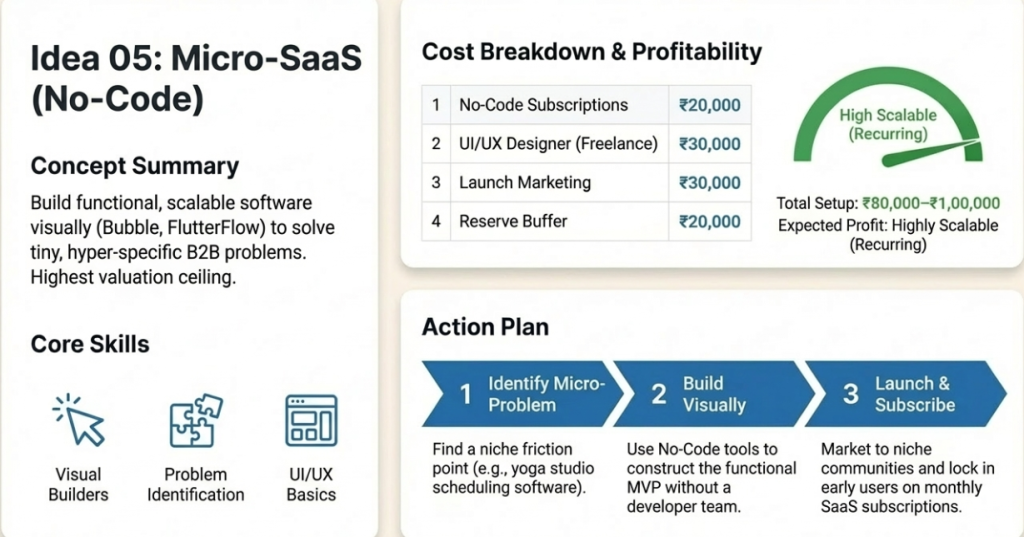
| 5. Micro-SaaS (No-Code) | ₹80,000 (up to ₹1 Lakh) | Visual builders (Bubble, FlutterFlow) | Highly scalable valuation ceiling | Tech-savvy problem solvers |
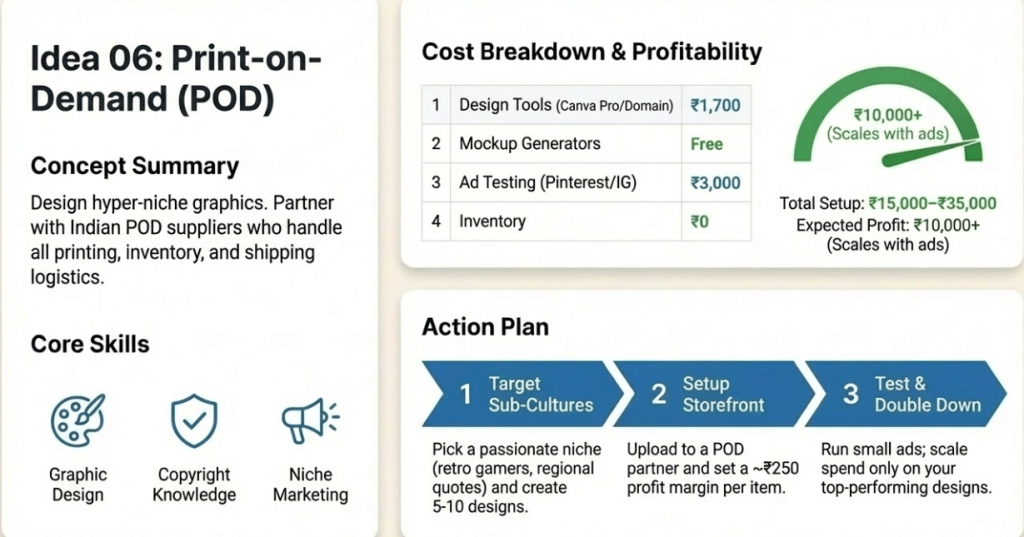
| 6. Print-on-Demand (POD) | ₹15,000 – ₹35,000 | Graphic design, Niche marketing | ₹10,000+ (scales with ad spend) | Digital artists, Creatives |
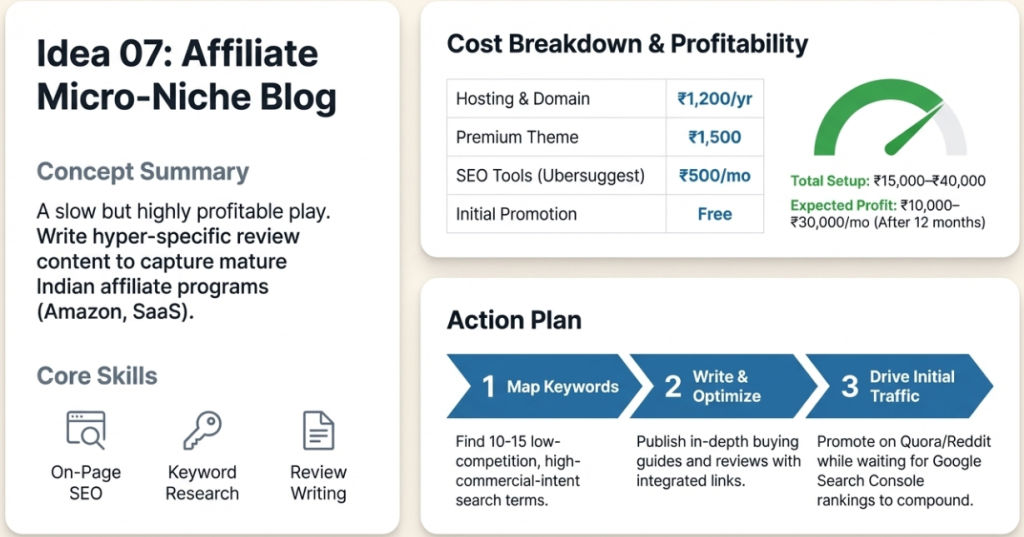
| 7. Affiliate Marketing Blog | ₹15,000 – ₹40,000 | SEO, Keyword research, Review writing | ₹10,000 – ₹30,000 (after 12-18 months) | Writers, Niche hobbyists |
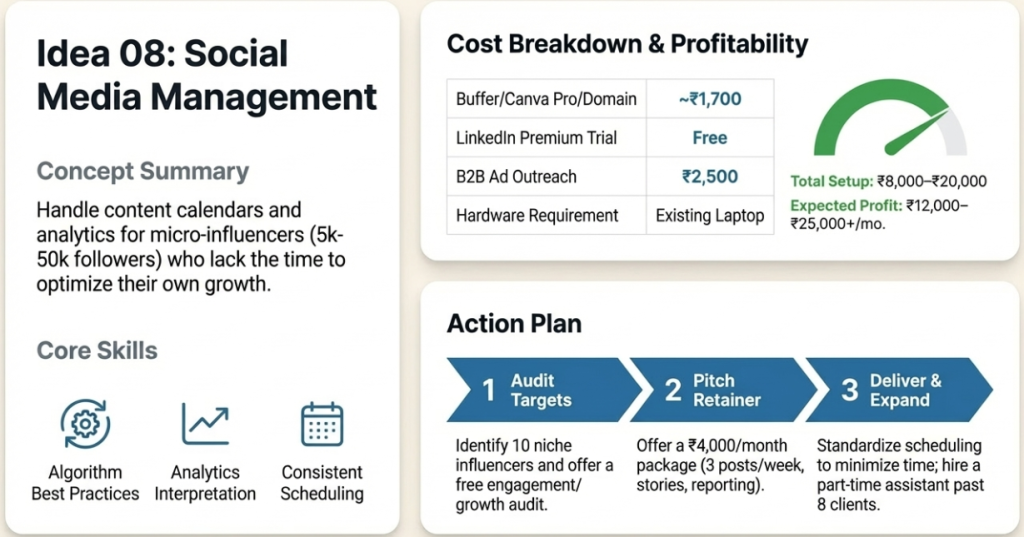
| 8. Social Media Management | ₹8,000 – ₹20,000 | Platform analytics, Content scheduling | ₹12,000 – ₹25,000+ | Organizers, Trend followers |
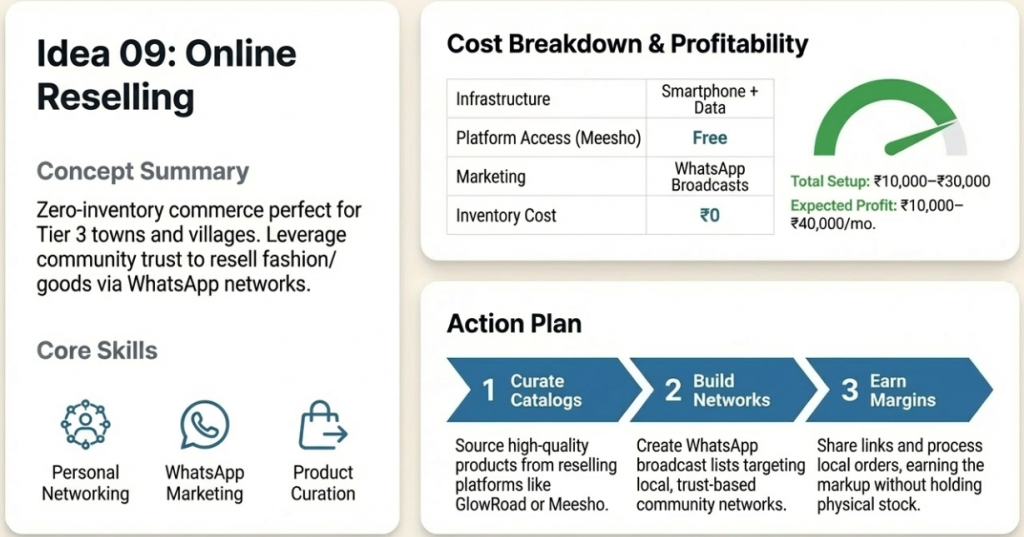
| 9. Online Reselling | ₹10,000 – ₹30,000 | Personal networking, WhatsApp marketing | ₹10,000 – ₹40,000 | Villages, Tier 3 towns |
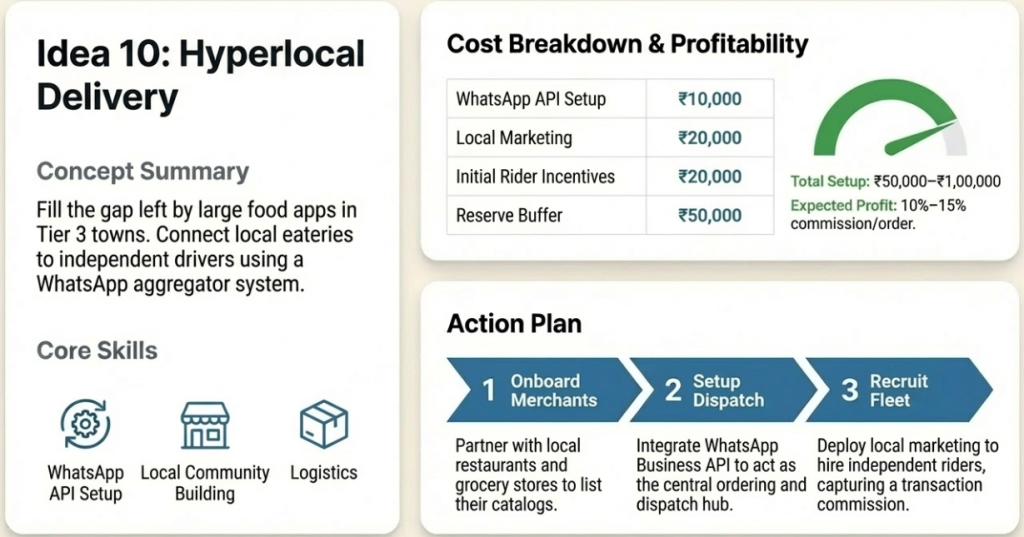
| 10. Hyperlocal Delivery | ₹50,000 (up to ₹1 Lakh) | WhatsApp API, Local community building | 10% – 15% commission per order | Villages, Tier 3 towns |
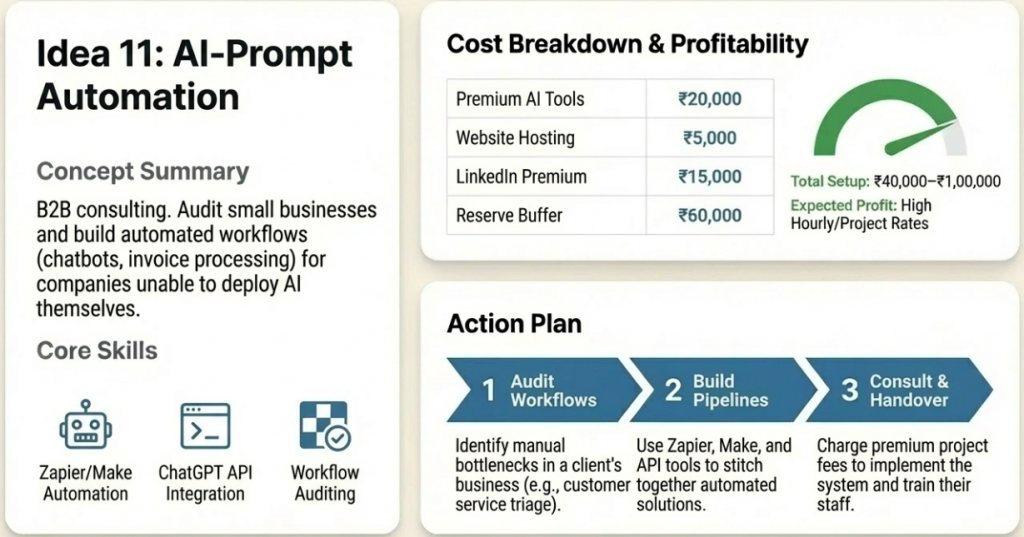
| 11. AI-Prompt Engineering | ₹40,000 (up to ₹1 Lakh) | Zapier, Make, ChatGPT API automation | High hourly/project consultancy rates | Tech professionals, Developers |
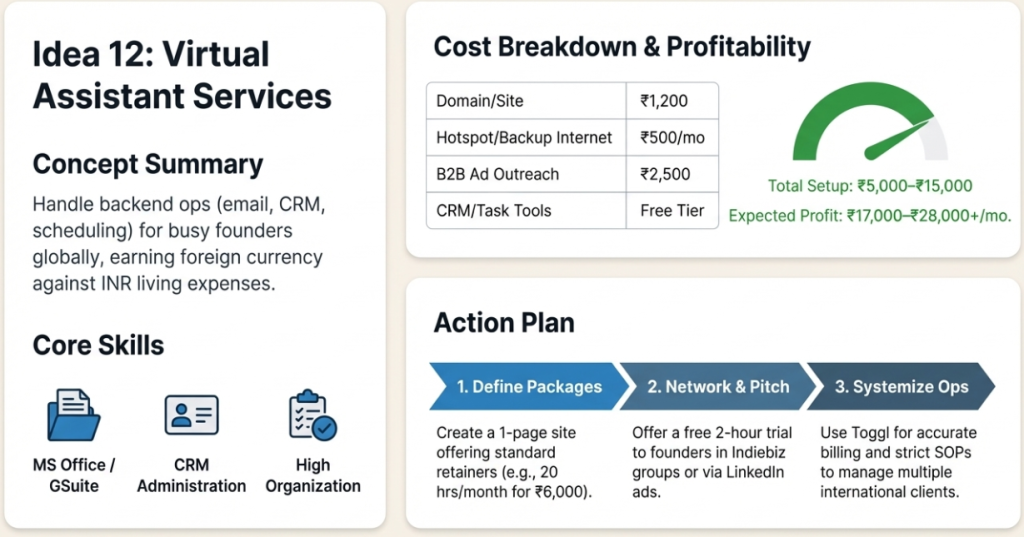
| 12. Virtual Assistant Services | ₹5,000 – ₹15,000 | MS Office/GSuite, CRM tools, Organization | ₹17,000 – ₹28,000+ | Detail-oriented administrators |
The best online businesses under ₹1 lakh in India include freelance digital marketing, online tutoring, content writing, dropshipping, social media management, video editing, and virtual assistant services. Most can be launched within 2–4 weeks with minimal equipment. Choosing based on your existing skills gives you the fastest path to your first income.
What it is –
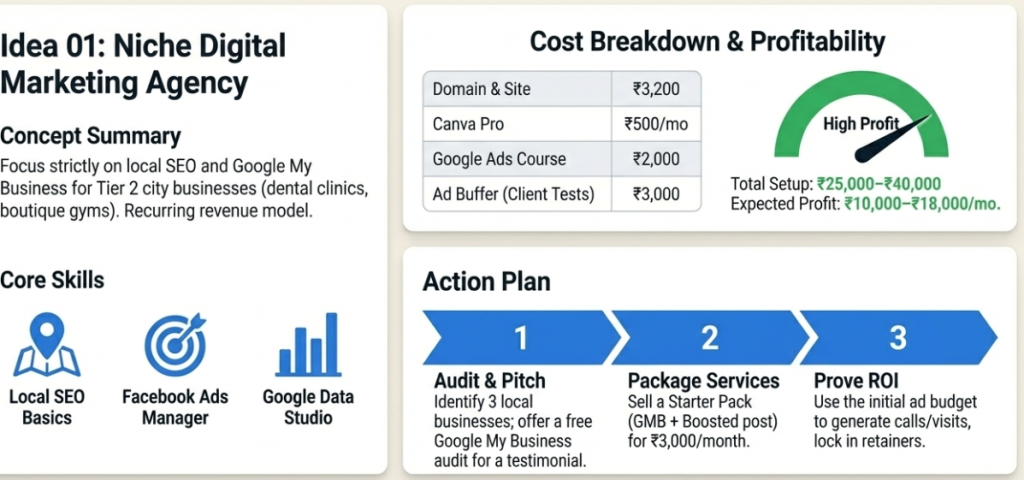
Today, local businesses—like dental clinics in Tier 2 cities or boutique gyms—know they need an online presence, but they don’t know how to build one. Starting a digital marketing business under 1 lakh is entirely feasible if you niche down. Focus strictly on local SEO and Google My Business optimization for specific industries.
How it works: You manage local search rankings, run small-budget Facebook ads, and handle lead generation.
Startup cost breakdown: ₹25,000 – ₹40,000
Skills needed
Steps to launch
Real world earning outlook
A retainer of ₹3,000–₹5,000 per client is common. With five clients, monthly revenue is ₹15,000–₹25,000, and profit after modest expenses can be ₹10,000–₹18,000.
Pros
Cons
What it is
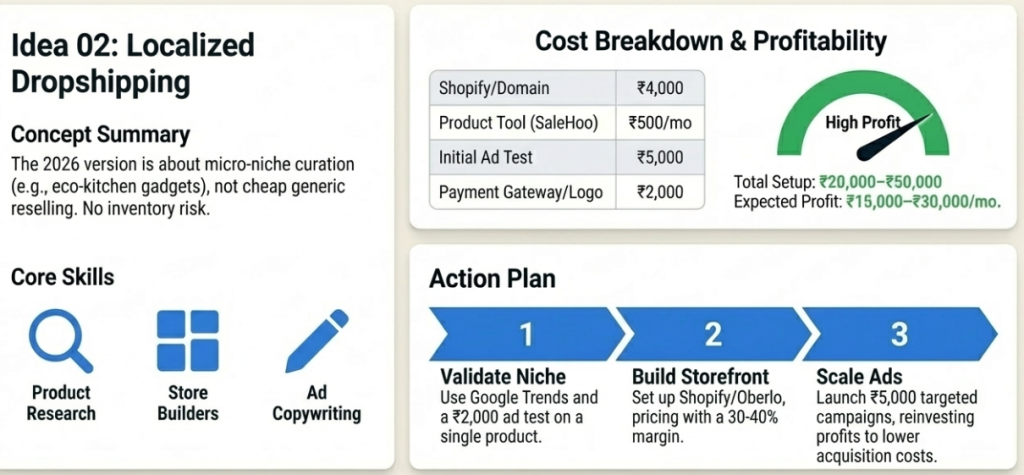
Dropshipping is misunderstood in India. Most people think it means reselling cheap Chinese products with a giant markup. That’s the 2015 version. The 2026 version is about niche selection and building a brand around a specific category.
You create an online store that sells a curated range of products (e.g., eco‑friendly kitchen gadgets) without holding inventory. When a buyer orders, the supplier ships directly.
Startup cost breakdown: ₹20,000 – ₹50,000
Skills needed
Steps to launch
Real‑world earning outlook
A well‑tested niche can generate ₹15,000–₹30,000 monthly profit after ad spend within three months, assuming a 2 % conversion rate and average order value of ₹800.
Pros
Cons
What it is
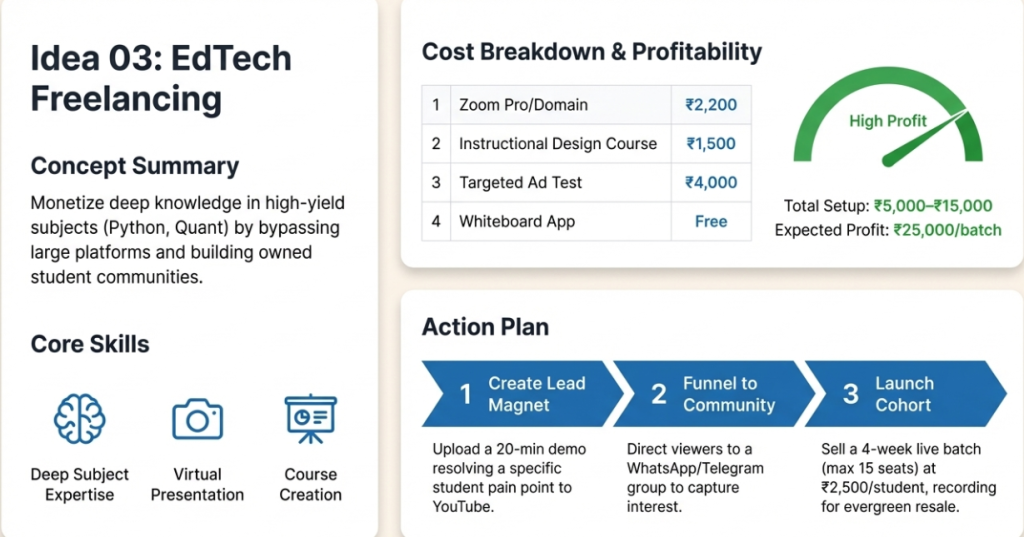
Education is recession-proof. Identify a high-demand skill (Python, Excel, Video Editing) and create structured courses. Offer live or recorded lessons for exams like SSC, Banking, or State PSC, focusing on one high‑yield subject (e.g., Quantitative Aptitude).
Platforms like Vedantu, Unacademy, and Teachmint let you onboard quickly. But the real money comes from building your own student base on WhatsApp or Telegram and charging directly, cutting out the platform commission entirely.
Startup cost breakdown: ₹5,000 – ₹15,000
Skills needed
Steps to launch
Real‑world earning outlook
A batch of 12 students at ₹2,500 each yields ₹30,000 revenue. After platform and ad costs (~₹5,000), profit ≈ ₹25,000 per month. Repeating the batch every two months can create a steady stream.
Pros
Cons
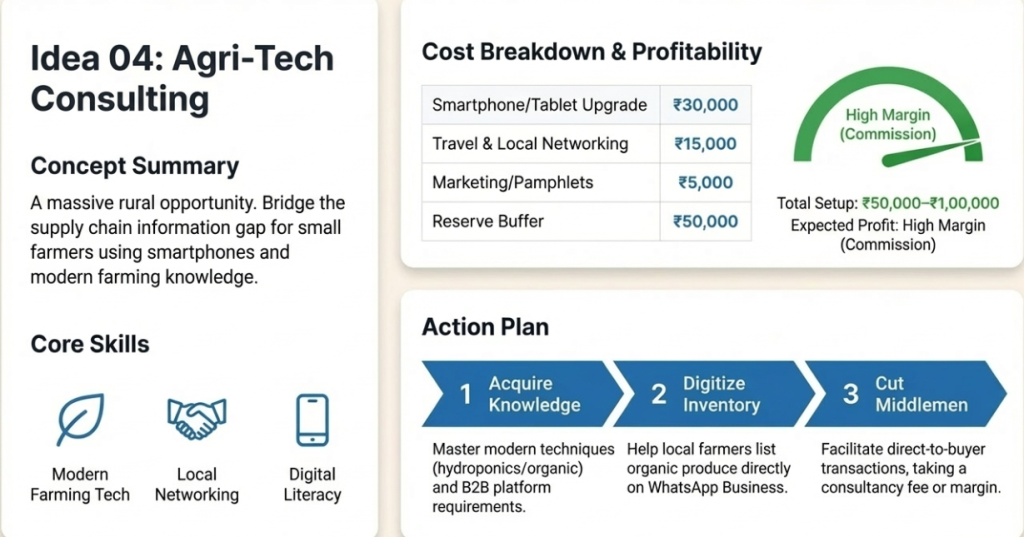
If you are looking for a business under 1 lakh in a village, this is a massive opportunity. Armed with a smartphone, internet access, and knowledge of modern farming techniques (like hydroponics or organic fertilizers), you can consult local farmers.
Why it works: It is one of the most successful village business ideas under 1 lakh because it solves a real, physical supply chain problem using simple digital tools.
How it works: You bridge the information gap. You help farmers list their organic produce directly on WhatsApp Business or local B2B platforms, cutting out the middlemen.
Capital Allocation:
Travel & local networking: ₹15,000
Marketing materials/pamphlets: ₹5,000
Smartphone/Tablet upgrade: ₹30,000
Buffer: ₹50,000
Why it works: It is one of the most successful village business ideas under 1 lakh because it solves a real, physical supply chain problem using simple digital tools.
Software as a Service used to require coding teams. Now, tools like Bubble or FlutterFlow let you build functional apps visually. Solve a tiny, specific problem (e.g., appointment scheduling for yoga studios).
What it is
Design graphics (quotes, illustrations) and sell them on t‑shirts, mugs, or phone cases via POD platforms like Printful, Teespring, or Indian counterpart Printrove.
How it works: You design it. Someone else prints and ships it. That’s the entire model. Partner with Indian POD suppliers like Blinkstore or Printrove. You focus entirely on creating relatable, niche designs (e.g., regional language quotes, specific professions) and marketing them.
Startup cost breakdown: ₹15,000 – ₹35,000
Skills needed
Steps to launch
Real‑world earning outlook
With a 5 % conversion rate on ad traffic and an average order value of ₹600, ₹3,000 ad spend can generate ~₹9,000 sales, yielding ~₹2,250 profit. Scaling ad spend to ₹15,000/month can bring ₹10,000+ monthly profit.
Pros
Cons
What it is –
The Indian affiliate market has matured significantly. Amazon India, Flipkart, Cuemath, upGrad, and dozens of SaaS companies run active affiliate programs. A niche blog about budgeting tools, coding bootcamps, or fitness supplements can generate ₹20,000–₹60,000/month within 12–18 months.
Building a blog around a highly specific topic (like “Best Electric Scooters in India” or “Personal Finance for Indian Doctors”) is a slow but highly profitable small business idea under 1 lakh 2026.
Startup cost breakdown: ₹15,000 – ₹40,000
Skills needed
Steps to launch
Real‑world earning outlook
Affiliate commissions in India range from 2‑10 %. A site earning ₹50,000 monthly sales with a 5 % average commission yields ₹2,500 profit. With consistent content growth, sales can reach ₹2–₹3 lakh/month, translating to ₹10,000–₹30,000 profit.
Pros
Cons
What it is – Handle content calendars, caption writing, and basic analytics for influencers with 5k‑50k followers who lack time to manage their accounts.
Startup cost breakdown: ₹8,000 – ₹20,000
Skills needed
Steps to launch
Real‑world earning outlook
With four clients at ₹4,000 each, monthly revenue is ₹16,000. After tool subscriptions (~₹1,500) and modest ad spend, profit can be ₹12,000–₹14,000. Scaling to eight clients pushes profit past ₹25,000.
Pros
Cons
Startup Cost: ₹10,000 – ₹30,000
Reselling platforms like Meesho, GlowRoad, and Shop101 allow you to list and sell products without holding stock. You share product links with your network, and when someone buys, you earn a margin.
The model works particularly well in villages and Tier 3 towns where people trust local recommendations over cold ads. A woman in Madhya Pradesh can run a thriving saree or ethnic wear reselling business on WhatsApp with almost no overhead.
What you’ll spend on: Mostly your time, a smartphone, and a data plan. Optional: a small budget for WhatsApp Broadcast list building.
Income potential: ₹10,000–₹40,000/month, depending on network size and product category.
Another excellent home-based online business in India village or Tier 3 town. Large food delivery apps often ignore smaller towns due to logistics. You can set up a simple WhatsApp-based ordering system connecting local eateries or grocery stores with local independent delivery drivers.
Whether you’re building a startup or preparing for your next big competitive exam, staying informed is key. Join the [Tech Guru Shiksha] community on YouTube for daily videos on General Knowledge, Current Affairs, and Quantitative Aptitude.
This is a rapidly growing field. Many small businesses know AI exists but have no idea how to use it. You can build a consultancy where you audit a company’s workflow and build automated AI systems for them (e.g., automated customer service chatbots, automated invoice processing).
What it is –
Virtual assistants handle the backend operations that busy founders, coaches, and executives don’t want to deal with — email management, calendar scheduling, data entry, research, customer support, and more.
Provide administrative, customer support, or data entry help to early‑stage startups that need flexible, affordable help.
Startup cost breakdown: ₹5,000 – ₹15,000
Skills needed
Steps to launch
Real‑world earning outlook
A retainer of ₹6,000 for 20 hours/month equals ₹300/hour. With three clients, monthly revenue is ₹18,000. After tool and internet costs (~₹1,000), profit ≈ ₹17,000. Scaling to five clients pushes profit past ₹28,000.
Pros
Cons
This is one of the most underrated online business ideas in India. It requires no specific technical skills to start, just reliability, organisation, and communication. Many VA clients are based in the US, UK, or Australia, which means you’re earning in foreign currency while living on Indian expenses.
🚀 Earn ₹2,000 a day while preparing for your dream job! Don’t let your competitive exam prep suffer while you hustle. Join Tech Guru Shiksha for the best, easy-to-understand daily videos on: ✔️ GK & Current Affairs ✔️ Reasoning & Quantitative Aptitude ✔️ Mock Tests & PYQs
₹1 lakh is enough to start. It’s not enough to waste. The 12 ideas in this guide span different skill sets, timelines, and income models — from quick-start options like online reselling and virtual assistance, to higher-ceiling plays like affiliate blogging and course creation.
The best online business under ₹1 lakh in India is the one you actually start and stick with. The common thread: all of them work online, none of them require a physical location, and all of them can be started by someone in a Tier 2 city or a village with a smartphone, a laptop, and a plan.
Pick one. Start this week. The market rewards action far more than it rewards research.
Online tutoring, content writing, virtual assistant services, and online reselling via Meesho or GlowRoad can all be started for under ₹10,000. These require more time investment than capital.
Yes, but only with the right niche and supplier relationships. Dropshipping on thin margins without research rarely works. Focus on categories with low return rates and local suppliers to minimise delivery delays.
Absolutely. Online reselling, tutoring, content writing, and virtual assistance all work well from villages, provided you have a reliable internet connection and a smartphone or laptop.
Digital marketing freelancing and online course creation tend to offer the highest profit margins relative to investment. Course creation scales without additional cost per unit, making it particularly attractive long-term.
If your annual turnover is expected to be under ₹20 lakh (₹10 lakh for special category states), GST registration is not mandatory. As you scale, consult a CA for compliance guidance.
Ready to turn your capital into a company? Download our free Startup Budget Calculator to see exactly how to split your ₹1 lakh across setup, marketing, and operations.